
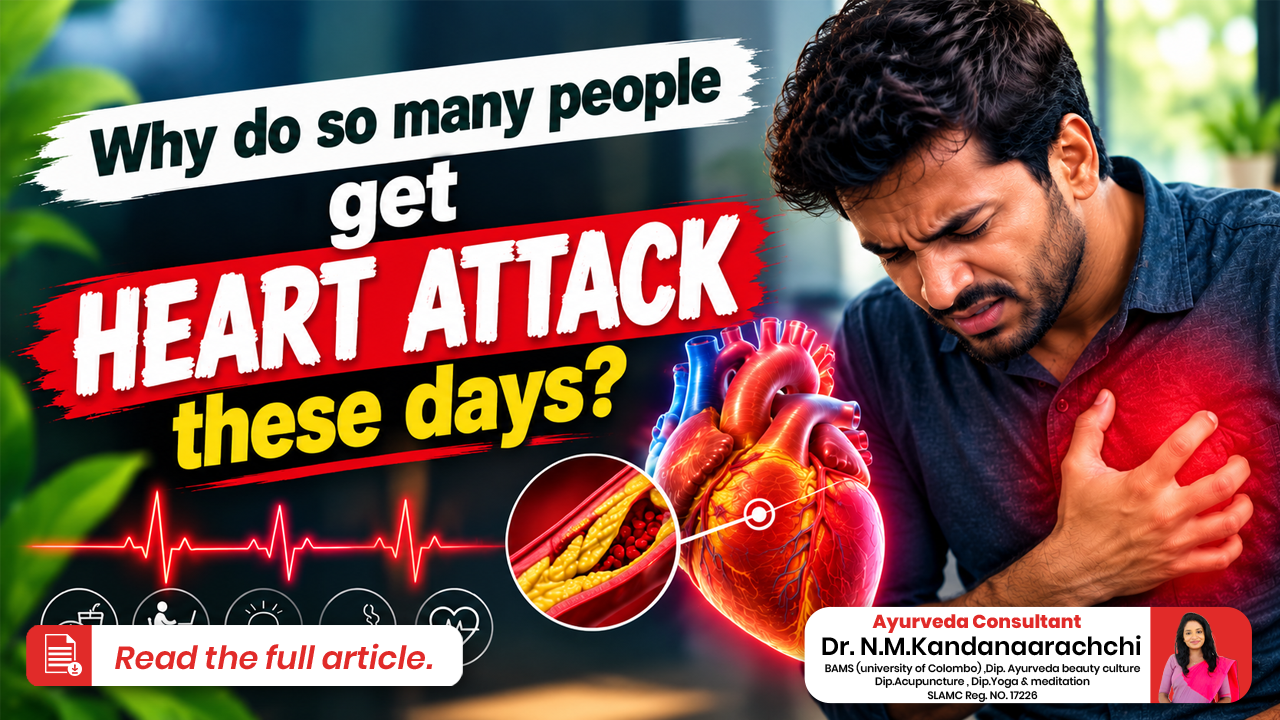
Why Are So Many People Suddenly Getting Heart Attacks? ❤️🩹
Think of the human heart as an engine that runs continuously without a break. A heart attack mainly happens when the blood vessels supplying this engine become blocked.
💚 Welcome to another edition of the Naturista Prana Sathkara Program, where we regularly discuss essential health topics with you. Today, I want to talk about one of the biggest health concerns in our society: Heart Attacks.
As a doctor, one of the most common questions patients ask me in the clinic is: "Doctor, why are so many people suddenly getting heart attacks these days?"
Think of the human heart as an engine that runs continuously without a break. A heart attack mainly happens when the blood vessels supplying this engine (the coronary arteries) become blocked due to cholesterol and fatty deposits.
Understanding your risk factors—both the ones you can control and the ones you can’t—is the first step toward prevention.
🛠️ Modifiable Risk Factors (Things You Can Change)
- High Blood Pressure: Damage to the inner walls of blood vessels makes it easier for blood clots to form.
- High Cholesterol: High levels of LDL ("bad" cholesterol) create plaque inside the arteries, restricting blood flow.
- Diabetes: Uncontrolled blood sugar levels damage the heart's blood vessels over time.
- Smoking & Alcohol: Nicotine narrows blood vessels and increases the likelihood of blood clots forming.
- Unhealthy Diet & Physical Inactivity: Eating foods high in oil, sugar, and salt, combined with a sedentary lifestyle, leads to weight gain and extra strain on your heart.
- Chronic Stress: Constant stress triggers hormonal changes that drive up your blood pressure.
🤔 Non-Modifiable Risk Factors (Things You Cannot Change)
While you cannot alter these factors, knowing them helps you gauge your risk so you can take extra precautions:
- Genetics: You have a higher risk if a close family member (parents or siblings) suffered a heart attack at a young age.
- Age: Risk increases for men over 45 and women over 55.
- Gender: Men generally face a higher risk than pre-menopausal women (though a woman's risk increases post-menopause).
🏃🏻♂️ What Can You Do Today?
Prevention is always wiser than taking medicine after falling ill.
- Get Screened: If you are over 35, test your blood pressure, sugar, and cholesterol at least once a year.
- Stay Active: Walk for at least 30 minutes a day.
- Eat Smart: Fill your diet with fresh fruits and vegetables while cutting back on deep-fried foods, sugar, refined flour, processed foods, and artificial additives.
COMMENTS
No comments yet. Be the first to leave one!