
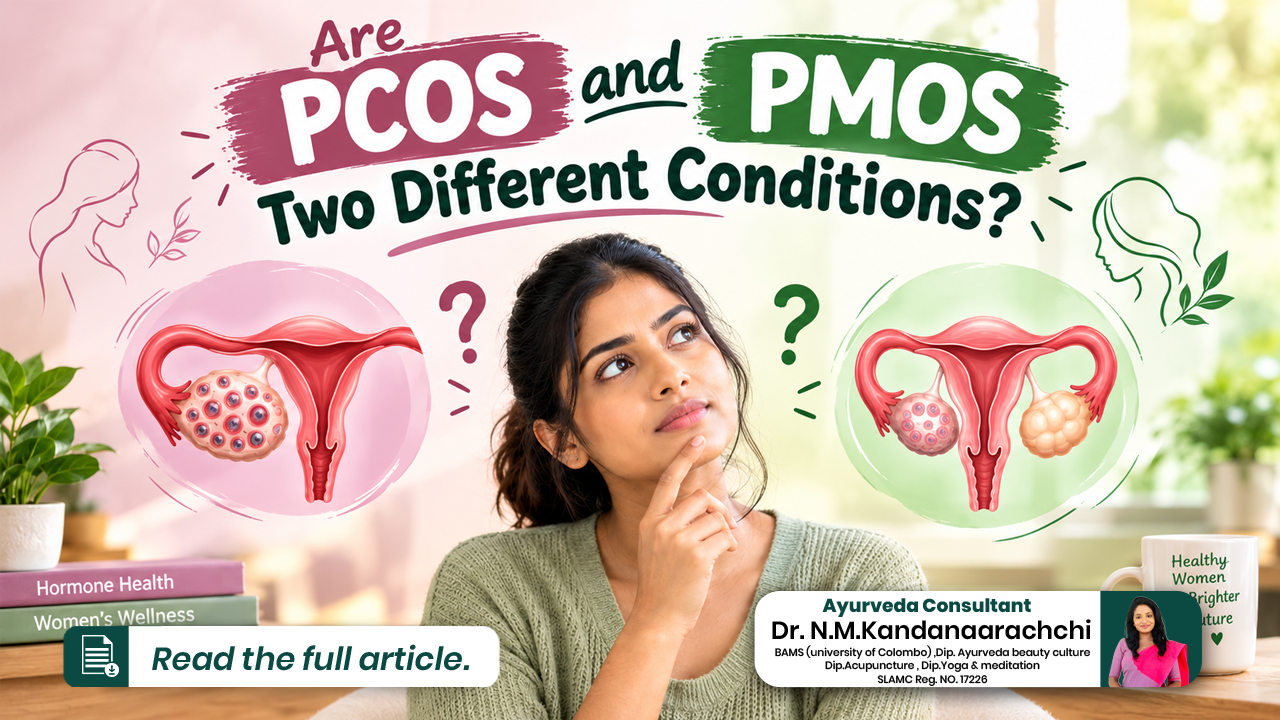
Is PCOS and PMOS the Same Thing? An Ayurvedic Perspective 🌸
Polycystic Ovary Syndrome (PCOS) is a very common health condition discussed among women today, yet many people still find it confusing.
Polycystic Ovary Syndrome (PCOS) is a very common health condition discussed among women today, yet many people still find it confusing. Let’s look at what this condition involves and how Ayurveda views and approaches it.
🤔 1. Are PCOS and PMOS Two Different Conditions?
No, PCOS and PMOS are not two different conditions—they refer to the exact same medical state.
- PCOS (Polycystic Ovary Syndrome): This is the traditional term used for a long time.
- PMOS (Polyendocrine Metabolic Ovarian Syndrome): Updated medical terminology and classifications sometimes use this name to better describe the multiple hormonal (Polyendocrine) and metabolic (Metabolic) factors involved in the condition.
Note: Many people assume that PCOS only involves fluid-filled sacs (cysts) in the ovaries. However, the root issue involves hormonal imbalances and metabolic dysfunction (such as insulin resistance), which prevent eggs from properly maturing and releasing.
🌿 2. How Does Ayurveda Identify PCOS / PMOS?
Although Ayurveda does not name "PCOS" directly, its symptoms are explained under conditions such as Artava Vyapad (menstrual disorders), imbalance of Kapha-Vata Doshas, and Granthi / Aama states.
- Imbalance of Kapha and Vata Doshas: Excess Kapha creates blockage or density around the ovaries, preventing egg release. Alterations in Vata disrupt the natural rhythm and flow of the monthly menstrual cycle.
- Aama (Slow Metabolism & Toxins): Sluggish digestion/metabolism (Agni) generates Aama (toxins), which block the body’s channels (Srotas).
- Medo Dhatu Dushti (Fat Tissue Imbalance): Leads to weight gain and unwanted fat accumulation.
- Anartava / Oligomenorrhea: Delayed, irregular, absent, or very light periods.
- Atiroma (Hirsutism): Excessive facial and body hair growth.
- Mukhadushika (Acne): Facial breakouts and acne.
- Sthaulya (Obesity): Rapid weight gain, particularly around the abdomen.
- Vandhyata (Infertility): Difficulty or delay in conceiving.
💊 3. Ayurvedic Treatments for PCOS / PMOS
Ayurveda aims to balance the whole body's doshas rather than just treating individual symptoms.
- Shodhana Chikitsa (Detoxification / Panchakarma): Vamana & Virechana clears excess Kapha and Pitta doshas, helping boost metabolism. Uttara Vasti is a specialized Ayurvedic therapy applied to the reproductive tract to purify the uterine environment and restore hormonal balance.
- Shamana Chikitsa (Internal Herbal Medicines): Doctor-prescribed formulations to balance doshas, regulate hormones, and clear channels (e.g., Kanchanara Guggulu, Varunadi Kashaya, Chandraprabha Vati, Ashokarishta).
- Weight & Insulin Management: Herbs such as Triphala, turmeric (Kaha), Venivelgeta, and bitter gourd (Karavila) help manage insulin resistance and blood sugar levels.
🥗 4. Diet and Lifestyle Guidelines
Diet and lifestyle contribute to 70% of PCOS management.
- Fiber-rich foods: Finger millet (Kurakkan), brown rice, oats, leafy greens (Gotukola, Mukunuwenna).
- Bitter and astringent vegetables: Bitter gourd (Karavila), snake gourd (Pathola), Kangkung.
- Legumes & Grains: Mung beans, chickpeas, black gram (Undu).
- Spices: Cinnamon (improves insulin sensitivity), fenugreek (Uluhal), ginger, garlic, black pepper, turmeric.
- Sugary foods, sweet desserts, and sweetened beverages.
- Refined wheat products (bakery items, kottu, pasta).
- Deep-fried foods and fast food.
- Excessive dairy products (which increase Kapha dosha).
- Hormonal Balance: Phytoestrogens in Shatavari naturally balance female hormones.
- Supports Ovulation: Promotes ovarian health and encourages proper egg growth and release.
- Strengthens Uterine Lining: Helps regulate the menstrual cycle and protects uterine health.
- Stress Reduction (Adaptogenic Effect): Reduces stress, anxiety, and mood swings caused by hormonal fluctuations.
How to Use: Drink Shatavari leaf herbal soup (Kenda) 2–3 days a week, or prepare Shatavari root powder (Churna) as a warm herbal porridge/soup.
If you experience irregular cycles or PCOS symptoms, consult a qualified Ayurvedic physician to identify your body constitution (Prakriti) and receive a personalized treatment plan!

COMMENTS
No comments yet. Be the first to leave one!