
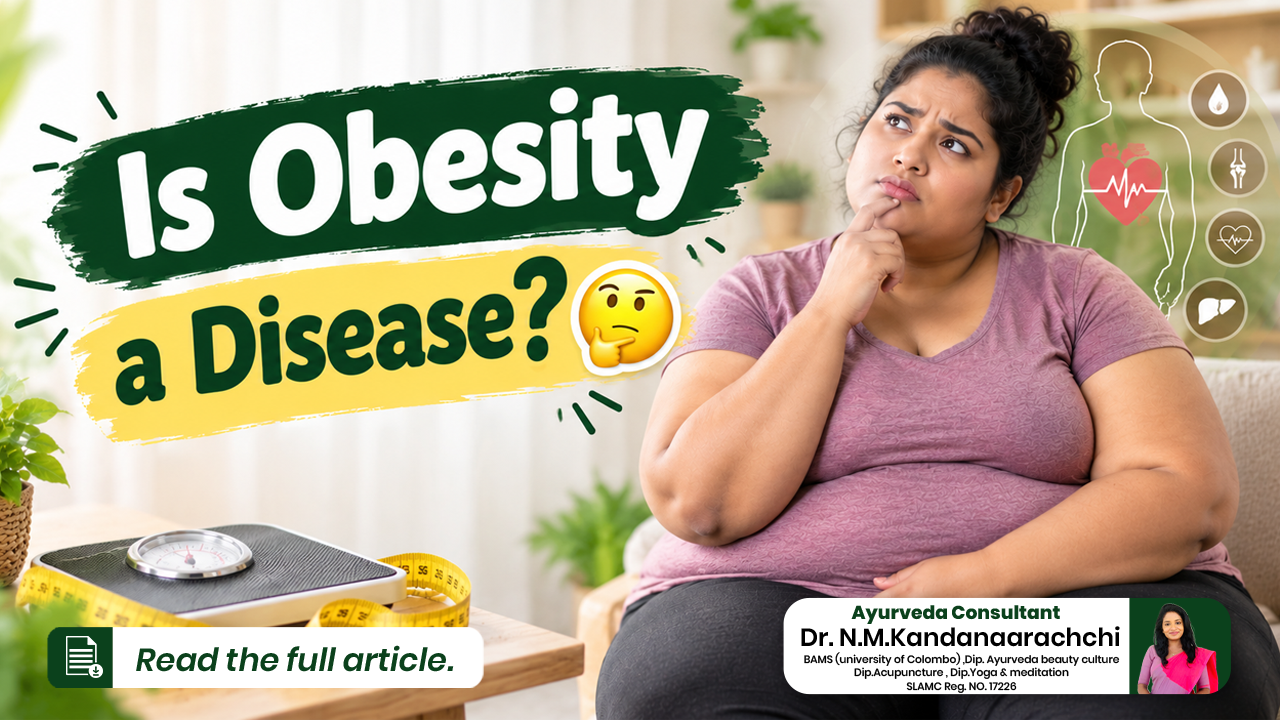
Is Obesity Just Weight Gain, or Is It a Disease? ⚖️
One of the main health challenges facing many people in our society today is obesity, or being severely overweight. This isn’t just a simple cosmetic issue regarding body appearance—it is a medical condition that can affect our entire lifespan.
Didn’t think it was a disease? Read the full article to find out! 🙃 One of the main health challenges facing many people in our society today is obesity, or being severely overweight. This isn’t just a simple cosmetic issue regarding body appearance—it is a medical condition that can affect our entire lifespan.
🤔 How Do You Know If You Are Overweight?
The standard method used to assess whether you are overweight is by calculating your BMI (Body Mass Index).
$$\text{BMI} = \frac{\text{Weight (in kg)}}{\text{Height (in m)} \times \text{Height (in m)}}$$
Health standard categories for South Asians:
- Under 18.5: Underweight
- 18.5 – 22.9: Normal / Healthy Weight
- 23.0 – 27.4: Overweight
- 27.5 and above: Obese
😳 Is Obesity Really a Disease?
Yes, absolutely! Leading international health organizations, including the World Health Organization (WHO), formally recognize obesity as a chronic disease.
It is not merely "gaining weight"—it is a complex medical condition that impairs your metabolism and disrupts hormonal balance.
🔍 What Causes Obesity?
Obesity is rarely caused by a single factor. Instead, it results from a combination of several factors:
- Unbalanced Diet: Consuming excessive amounts of high-calorie, high-sugar, oily, and processed foods.
- Lack of Physical Activity: A sedentary, sitting-heavy lifestyle and lack of regular exercise.
- Genetics: A higher risk of developing obesity if there is a family history of the condition.
- Hormonal & Medical Conditions: Conditions such as hypothyroidism (underactive thyroid) and PCOS (Polycystic Ovary Syndrome).
- Stress and Poor Sleep: Chronic stress and inadequate sleep trigger hormones that promote weight gain.
⚠️ What Health Complications Are Caused by Obesity?
Excess weight and body fat accumulation can lead to several severe health risks, including:
- Type 2 Diabetes
- High blood pressure and heart disease
- Fatty Liver Disease
- Bone and joint disorders: Especially knee pain / Osteoarthritis.
- Sleep Apnea: Breathing disruptions during sleep.
- Stroke
- Mental stress and depression
💡 What Should You Do to Lose Weight?
Losing weight is not about starving yourself. Instead, it requires paying close attention to both the quantity and quality of the food you eat.
- High-Fiber Foods: Whole grains such as brown rice, finger millet (kurakkan), oats, lentils, chickpeas, cowpea, and green gram.
- Vegetables & Leafy Greens: Cabbage, bitter gourd, snake gourd, drumstick (murunga), spinach, kankun, gotukola, and other low-calorie, nutrient-dense options.
- Quality Protein: Eggs, fish, skinless chicken, soy, and pulses (protein is essential to preserve muscle mass).
- Fruits: Low-sugar fruits consumed in moderation, such as guava, rose apple (jambu), papaya, mango, and apple.
- Adequate Hydration: Drinking between 2.5 to 3 liters of water per day.
- Sugary drinks, packaged juices, and soft drinks.
- Cakes, biscuits, pastries, and fast food.
- Deep-fried foods.
- Refined flour products (white bread, kottu, pasta).

COMMENTS
No comments yet. Be the first to leave one!